No alternative is safer than a credit card in every way. The better choice depends on whether you want to avoid debt, reduce exposure of a reusable payment number, limit how much money is reachable, or add a useful dispute process for eligible purchases.
That distinction matters because credit cards themselves can provide strong protections when online purchases go wrong. Replacing one with another payment method often changes the type of risk rather than eliminating it.
What “Safer” Means for an Online Payment
Before comparing payment methods, separate the risks you are trying to reduce. A method can perform well in one area while offering little advantage in another.
- Credential exposure: whether a merchant receives a reusable card or account number that could remain useful if the merchant is breached.
- Cash exposure: how much of your own money could become unavailable after an unauthorized transaction.
- Dispute and recovery protection: what legal rights or provider procedures may help after fraud, non-delivery, or another covered transaction problem.
- Debt risk: whether the payment method can create a balance that accrues interest or encourages borrowing.
It is also important to distinguish a payment interface from a funding source. A wallet such as Apple Pay can present payment credentials to a merchant while the actual money still comes from an underlying debit, prepaid, or credit account. A wallet can improve credential security without changing every legal or financial characteristic of the funding source underneath it.
The Federal Trade Commission’s online-shopping guidance emphasizes the dispute advantages of credit cards for several common purchase problems and warns against sellers who insist on hard-to-recover payment methods. The options below are therefore alternatives for particular risks and circumstances, not universal upgrades over credit.
Our Recommendations
Prepaid Card or Prepaid Account
Best for: limiting how much money is exposed through a dedicated payment account.
A prepaid account generally lets you spend funds that have already been loaded rather than borrowing through a revolving credit line. If you deliberately keep only a limited balance on an account used for online purchases, the amount immediately reachable through that account can be smaller than the money held in your main checking account.
For example, keeping $150 in a dedicated prepaid account can contain exposure to that balance more effectively than using an account holding several thousand dollars, provided the product does not automatically pull additional money from another account.
For U.S. prepaid accounts, registration and identity verification can affect available protections. CFPB Regulation E requirements for prepaid accounts address liability, error resolution, disclosures, consumer identification, and statements concerning Federal Deposit Insurance Corporation or National Credit Union Administration insurance eligibility where applicable.
The product’s disclosures still matter. Prepaid programs can differ in fees, reloading features, withdrawal access, insurance eligibility, and account protections.
Important limitation: a reloadable prepaid account is not the same product as an ordinary retail gift card, and registration or verification may be necessary for some account protections.
Tokenized Wallet With Debit or Prepaid Funding
Best for: reducing exposure of the reusable number on a physical payment card while avoiding conventional credit.
Tokenization substitutes a different payment value for a sensitive reusable credential. In practice, this can let a merchant process a transaction without receiving the same number printed on the physical card.
Apple documents this mechanism for Apple Pay. After an eligible card is provisioned, the issuer creates a device-specific Device Account Number. For supported payments, Apple says the actual payment-card number is not sent to the merchant; a Device Account Number and transaction-specific security information are used instead.
Google uses a related approach for eligible virtual cards. According to Google’s virtual-card documentation, a virtual card uses a randomly generated number in place of the actual card number. Availability depends on the card, issuer, network, transaction type, and region.
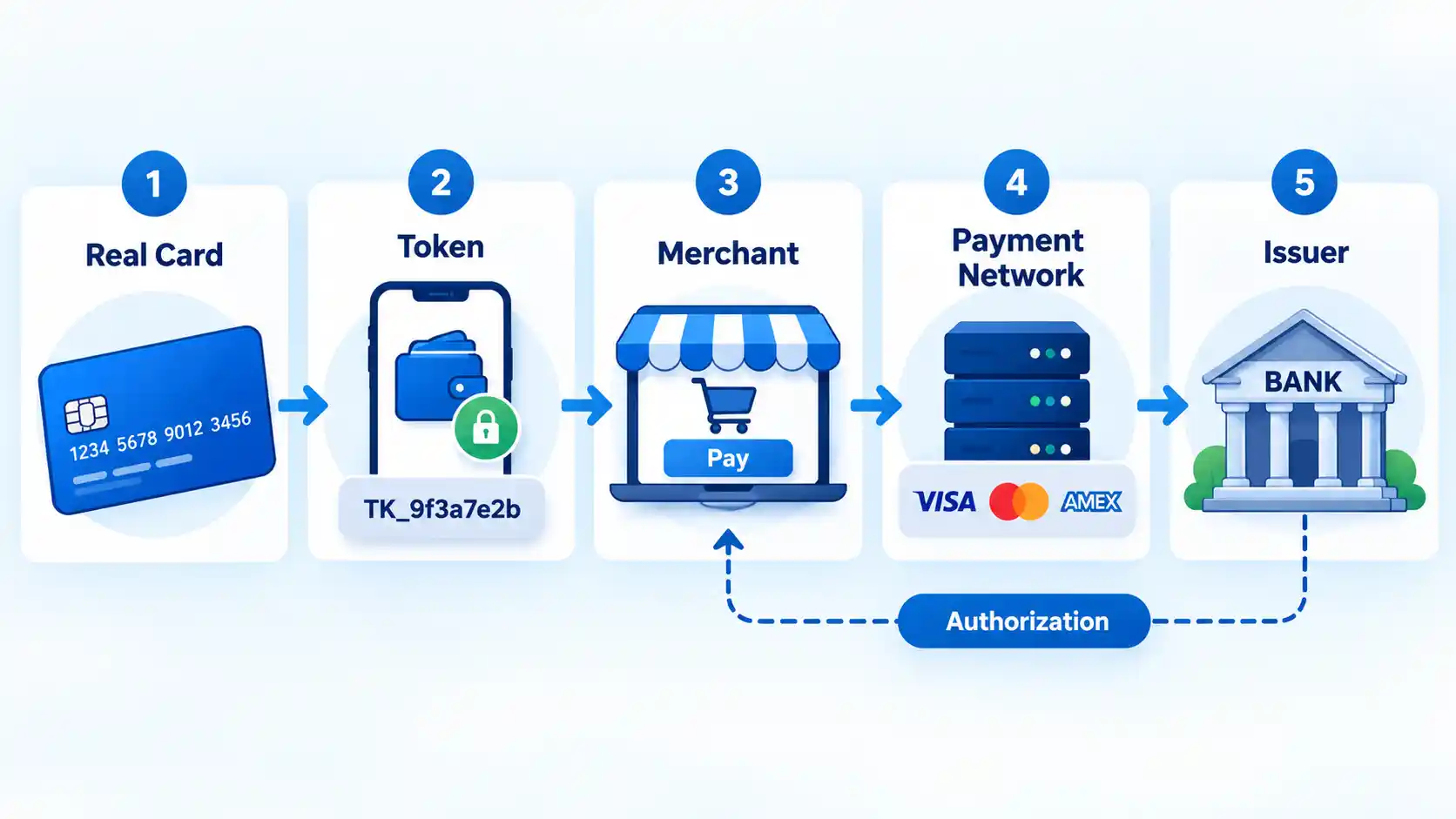
The funding source still matters. Apple Pay funded by a debit card remains connected to a debit account, while Apple Pay funded by a credit card is still using credit. Likewise, some virtual-card products are themselves tied to credit cards and therefore are not alternatives to credit at all.
A virtual card number is most useful when reducing reusable credential exposure is the primary goal rather than changing the underlying account type.
Important limitation: tokenization can reduce reusable card-number exposure, but it does not create stronger statutory dispute rights than those attached to the underlying funding account.
PayPal With a Non-Credit Funding Source
Best for: adding a payment intermediary and a provider-level dispute process for eligible commercial purchases without necessarily using a credit card.
PayPal can sit between a participating merchant and the bank, debit card, or eligible balance used to fund a purchase. If PayPal is funded with a credit card, however, it is not an alternative to credit. The distinction depends on the funding source selected for the transaction.
According to PayPal’s current privacy practices, PayPal does not share a customer’s full financial information with businesses or people receiving payment, although merchants still receive information needed to process and fulfill a transaction.
PayPal also provides a separate Purchase Protection process for qualifying commercial purchases. Under the U.S. PayPal Purchase Protection terms, eligible claims can include an Item Not Received claim or a Significantly Not as Described claim. The terms were last updated January 26, 2026.
Coverage is conditional. PayPal lists excluded items and transactions, requires qualifying purchases to meet its eligibility rules, and generally requires the buyer to use the Resolution Center process within the applicable deadline. Friends-and-family personal payments are specifically excluded from Purchase Protection.
Holding money inside a nonbank payment app creates a separate risk from using the app merely as a checkout layer. A CFPB advisory on payment-app balances warns that stored funds may not have federal deposit insurance, depending on how the service is structured.
The FDIC’s guidance on third-party financial apps similarly explains that a nonbank company itself is not FDIC-insured. Pass-through insurance can apply only when the relevant requirements for the underlying insured-bank arrangement are satisfied.
Important limitation: Purchase Protection is conditional, personal payments are excluded, and storing money in a nonbank payment app is not automatically equivalent to depositing money directly at an insured bank.
Debit Card
Best for: avoiding revolving credit-card debt while retaining broad card acceptance.
A debit-card purchase normally uses money already held in the linked bank or credit-union account. It can therefore suit someone who wants to avoid borrowing through a revolving credit line.
The trade-off is direct access to deposited money. Under U.S. Regulation E rules for unauthorized electronic fund transfers, potential consumer liability can depend on how quickly a lost or stolen access device or unauthorized transfer is reported.
For a lost or stolen access device, notice within two business days after learning of the loss or theft generally limits liability to the lesser of $50 or the unauthorized transfers made before notice. If notice is delayed, potential liability can rise to as much as $500 under the rule’s calculation.
A separate 60-day periodic-statement provision can create liability for subsequent unauthorized transfers that timely notice could have prevented. It is therefore inaccurate to summarize the rule as simply “all protection disappears after 60 days.”
These federal limits are U.S.-specific, and card networks or issuers may provide additional protections beyond the statutory minimum.
Choosing between a credit card and debit card for online shopping depends partly on whether avoiding borrowed funds matters more than keeping unauthorized transactions separated from checking-account cash.
Important limitation: an unauthorized debit transaction can reduce money available for bills while the issue is being investigated, making prompt detection and reporting particularly important.
Direct Bank Payment to a Trusted Recipient
Best for: established recipients when account-to-account payment is normal for the transaction.
Direct bank-payment systems can avoid a conventional credit-card account and may also avoid exposing a card number. They can make sense for known billers, established businesses, or recipients you have independently verified.
The risk changes substantially when the recipient is unfamiliar. Strong authentication can establish that you approved a transfer, but it does not establish that the person receiving the money is honest. A scammer can persuade a buyer to authorize a payment voluntarily.
The FTC warns shoppers not to buy from online sellers who insist that payment must be made by gift card, wire transfer, payment app, or cryptocurrency because scammers often prefer methods that make recovery difficult. The same guidance advises checking unfamiliar sellers independently before paying.
If you sent money to an online scammer , contact the bank or payment provider immediately rather than assuming an authorized transfer can simply be canceled.
Important limitation: recovery rights and reversal options vary by payment rail, provider, transaction circumstances, and jurisdiction, so direct bank payment should not be treated as universally safer than merchant card checkout.
Payment Methods That Are Poor Choices With an Unknown Seller
Some payment methods are legitimate in appropriate situations but are weak choices when an unfamiliar seller is asking you to leave normal merchant checkout.
- Gift cards: a seller instructing you to buy a gift card and provide its number or code is displaying a well-established scam warning sign.
- Wire transfers: useful for some legitimate transactions, but potentially difficult to recover after money reaches a fraudulent recipient.
- Cryptocurrency: avoiding a card network does not itself create a buyer-dispute process or guarantee recovery.
- Person-to-person payment apps: convenient for people you know, but sending money directly to an unknown seller can bypass protections attached to ordinary marketplace or merchant checkout.
The common failure mode is often not weak encryption. It is authorizing a payment to the wrong recipient. Authentication can confirm that you approved a transaction without confirming that the recipient’s identity or sales claims were genuine.
Which option should you choose?
Prepaid Card
Avoid this if: the product has unsuitable fees, automatic funding that defeats your exposure limit, or protections that depend on registration you have not completed.
Main trade-off: exposure can be contained, but prepaid products differ in fees, registration requirements, functionality, and insurance eligibility.
Tokenized Wallet
Avoid this if: you are assuming the wallet changes the legal protections or debt characteristics of the underlying account.
Main trade-off: stronger credential separation does not replace the risks and rules of the funding source beneath it.
PayPal
Avoid this if: the transaction is excluded from Purchase Protection or an unfamiliar seller asks you to use a personal transfer instead of normal commercial checkout.
Main trade-off: PayPal can add a separate dispute process, but coverage is conditional and stored balances can introduce separate deposit-insurance considerations.
Debit Card
Avoid this if: temporary loss of checking-account funds could interfere with essential bills or you are unlikely to notice unauthorized activity promptly.
Main trade-off: debit avoids ordinary credit-card debt, but unauthorized transactions can directly affect deposited funds.
Direct Bank Payment
Avoid this if: an unfamiliar seller pressures you to leave ordinary checkout and transfer money directly.
Main trade-off: direct payment avoids conventional credit and card-number exposure, but recovery can be difficult after you authorize payment to a scammer.
The right alternative depends on the risk you want to reduce. Prepaid accounts can contain balance exposure, tokenized wallets can reduce reusable credential exposure, PayPal can add a dispute process for eligible purchases, and debit cards can avoid revolving debt.
A credit card may still be the stronger option when U.S. unauthorized-use and merchant-dispute protections are the highest priority. Whatever payment method you choose, verify unfamiliar sellers independently and be cautious when a seller insists on a method that is unusually difficult to reverse.

💬 Comments